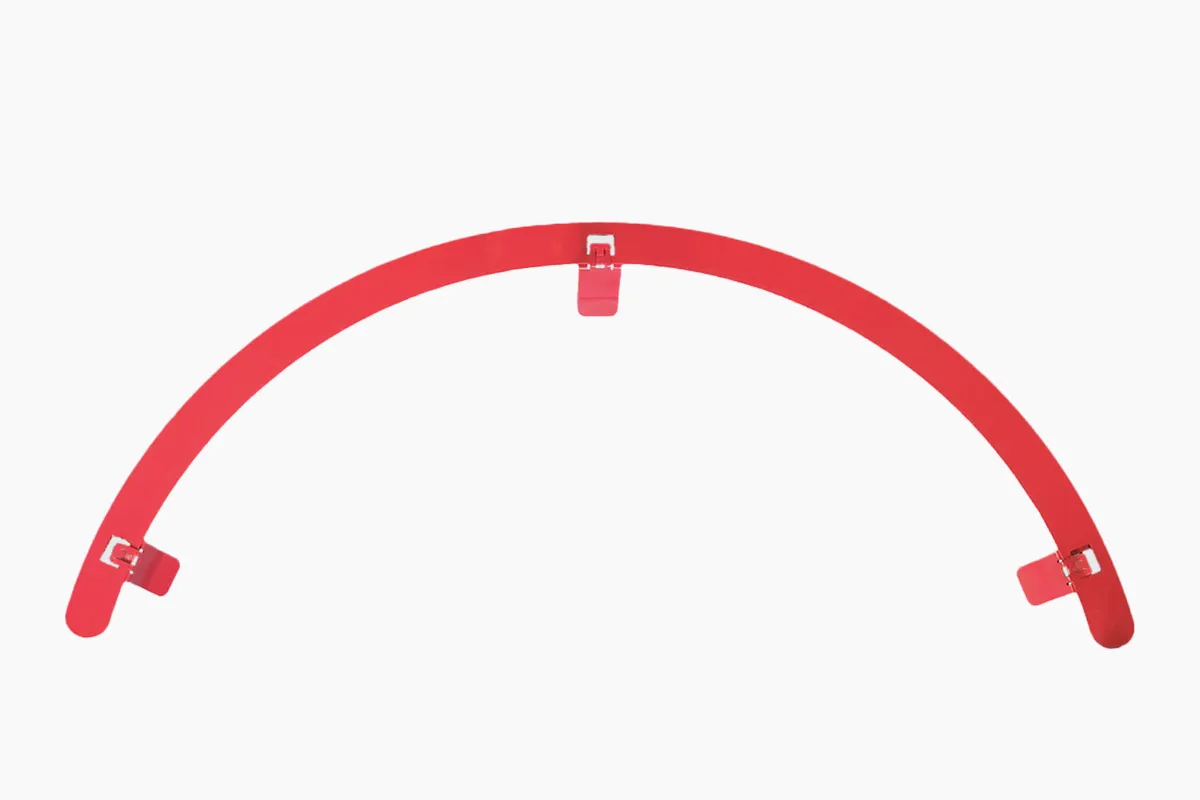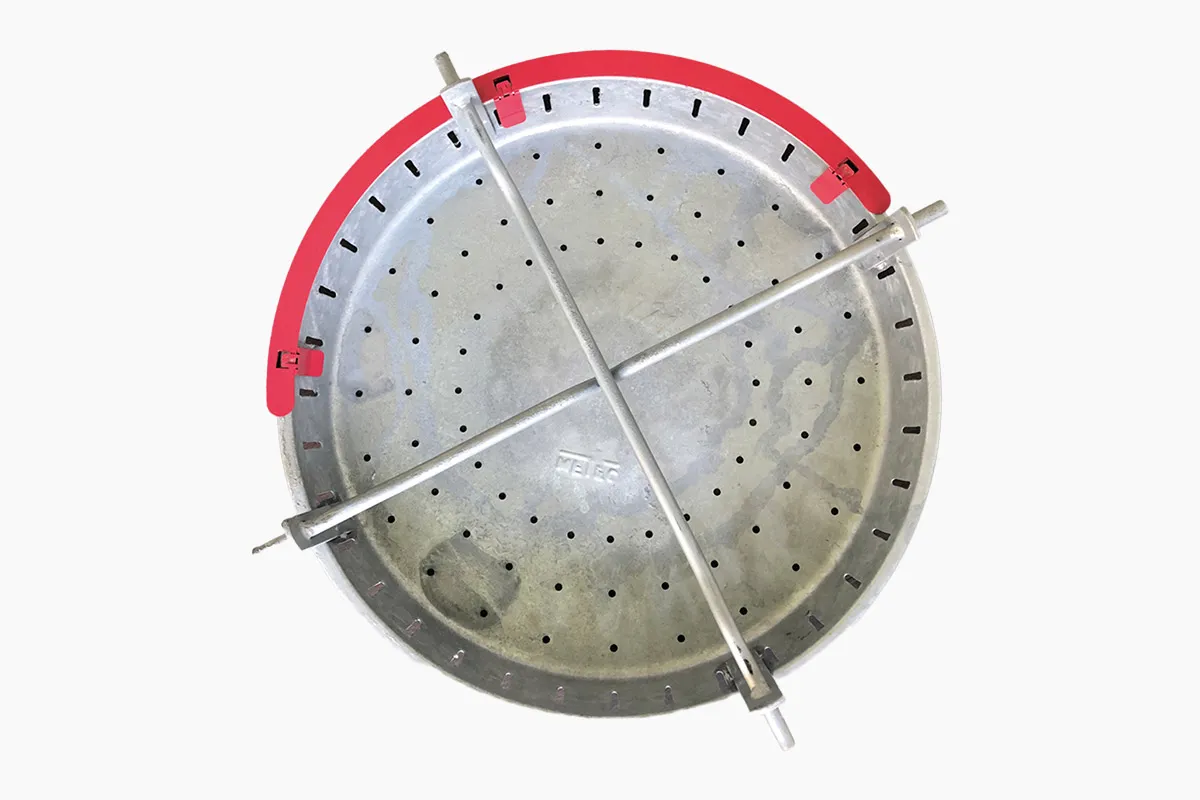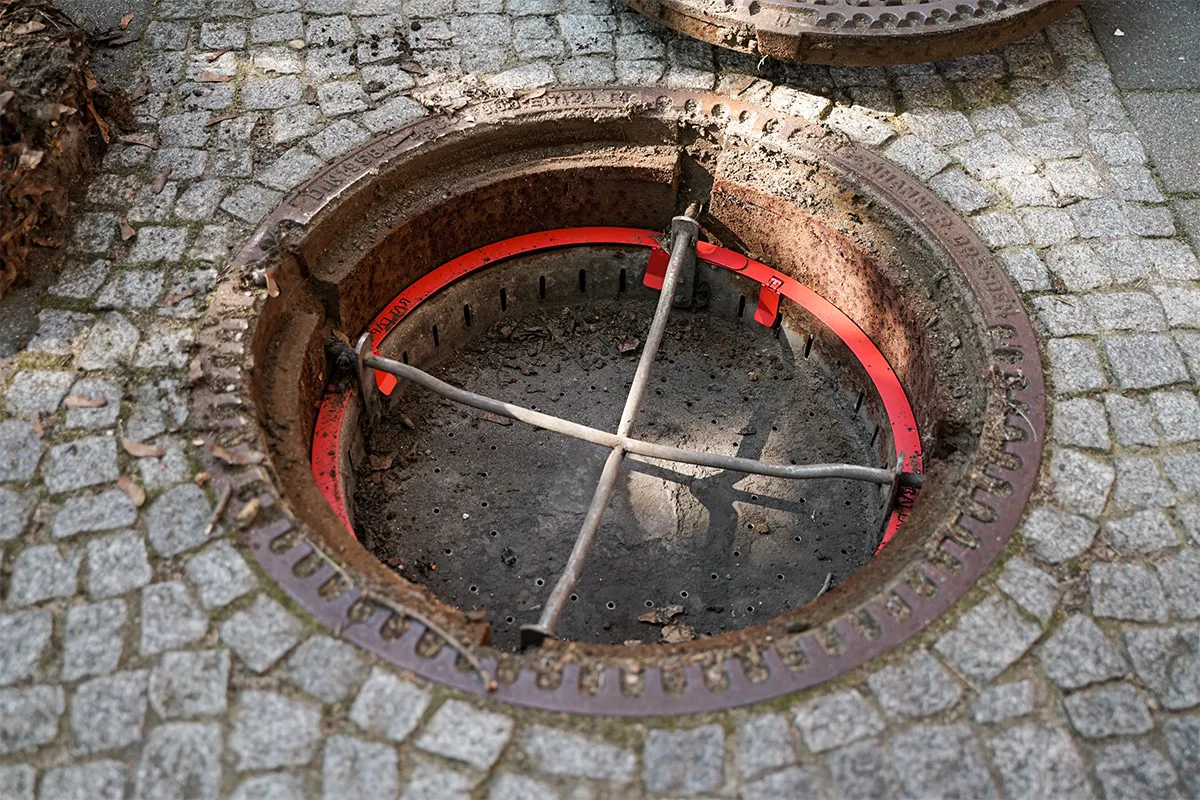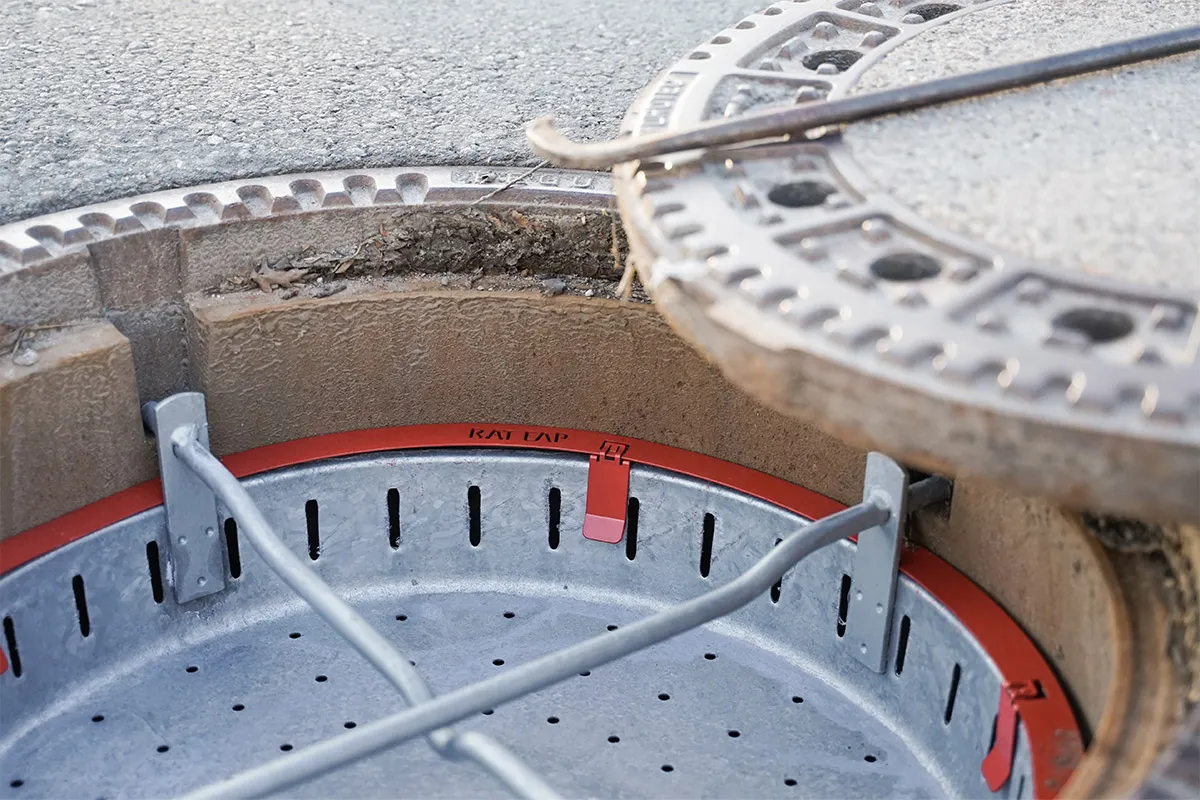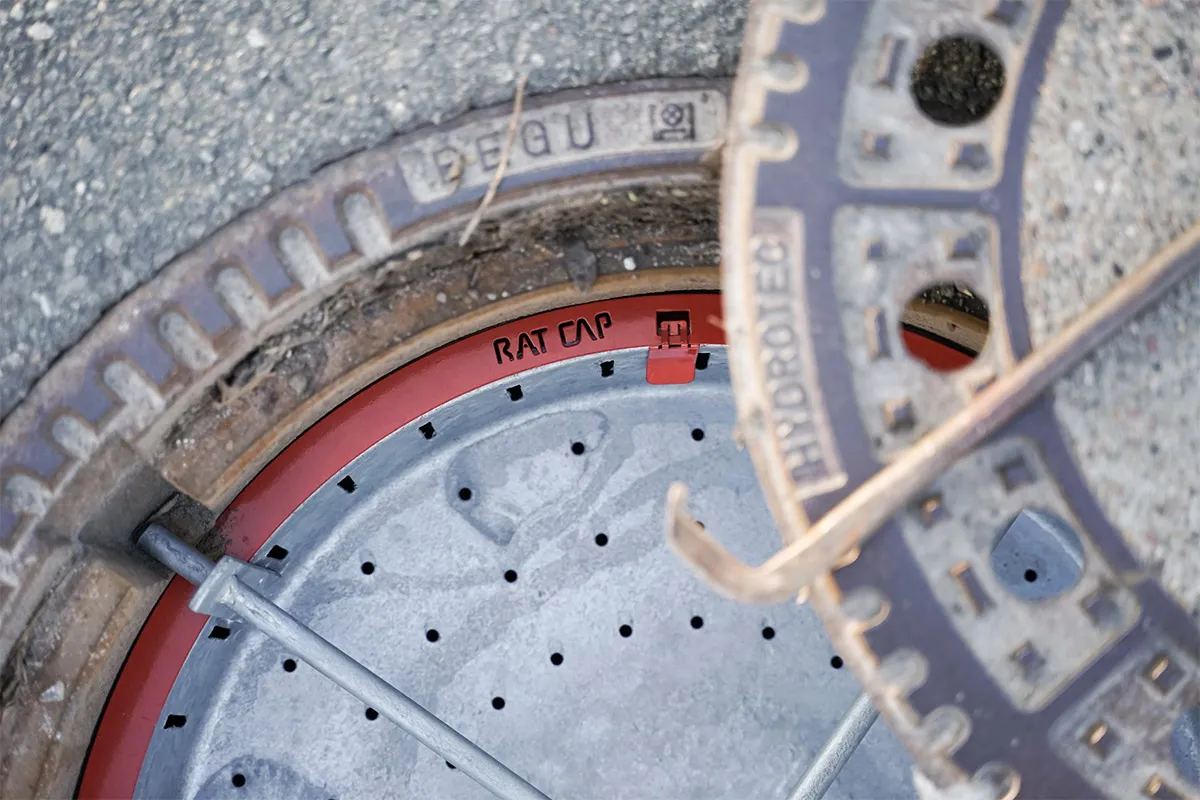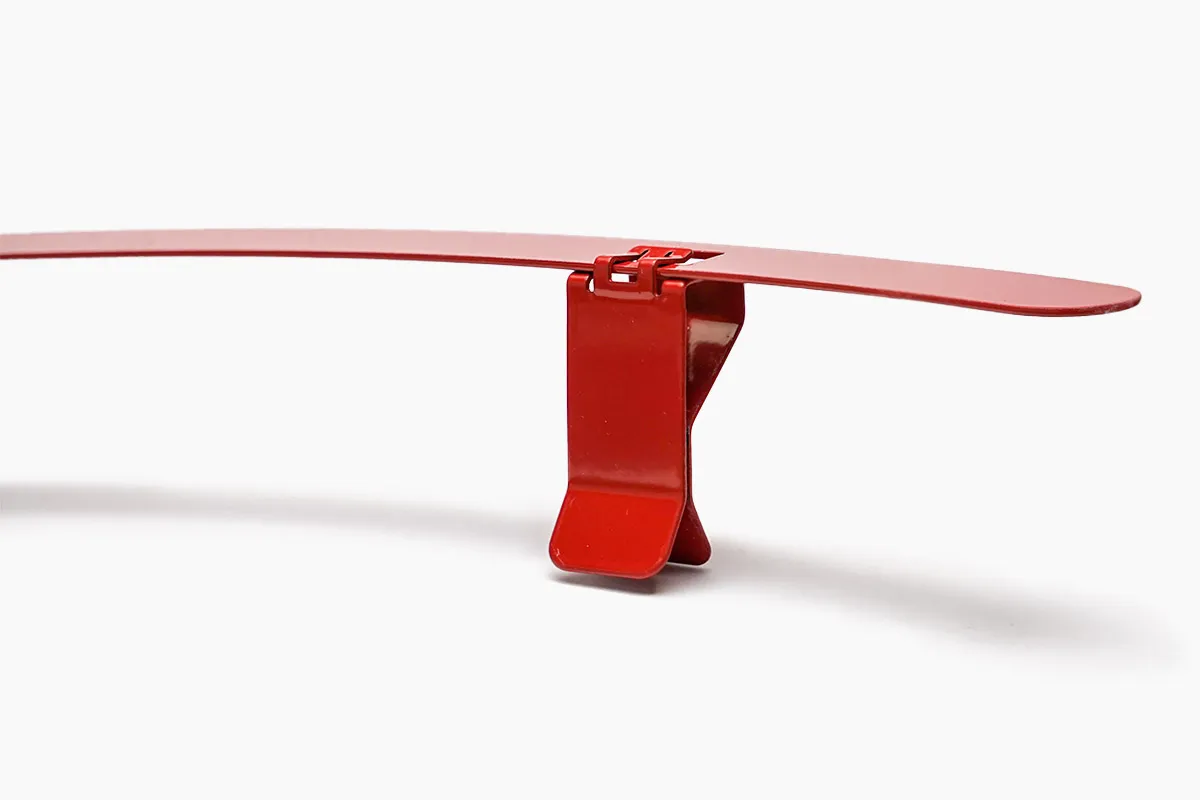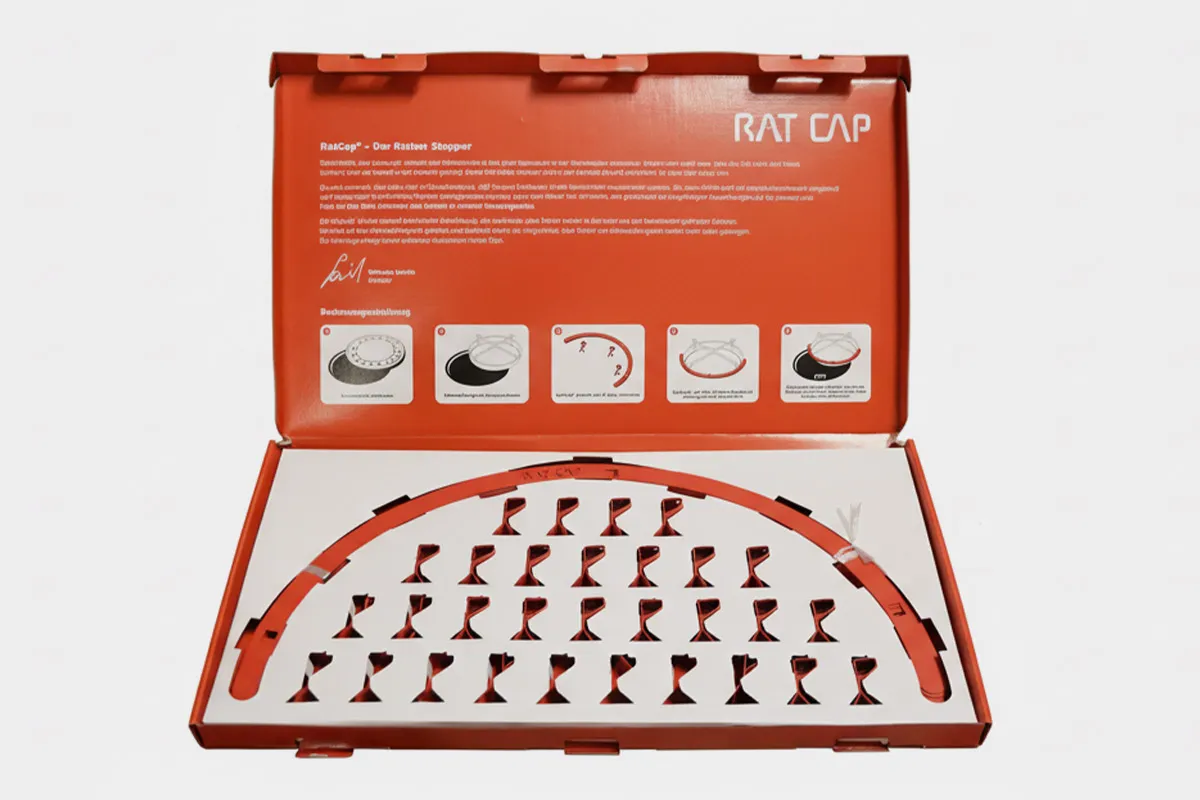

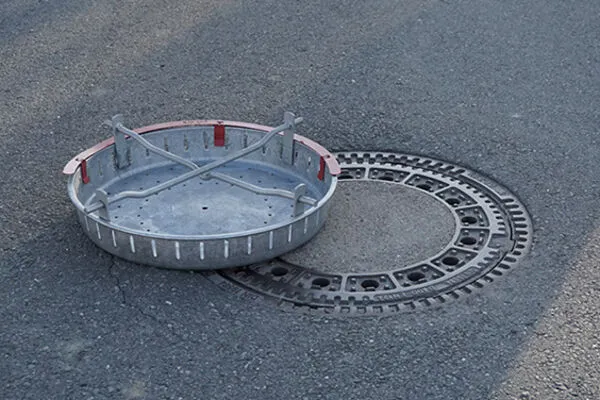
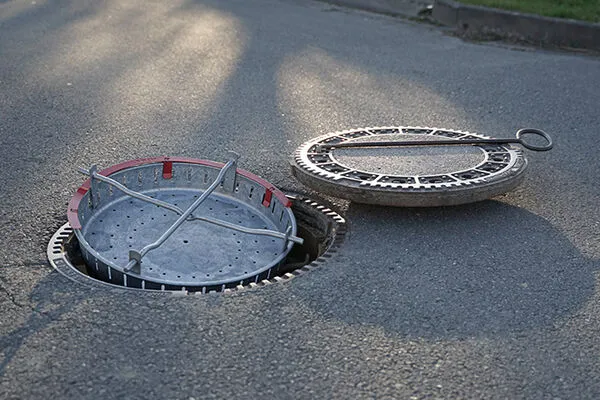
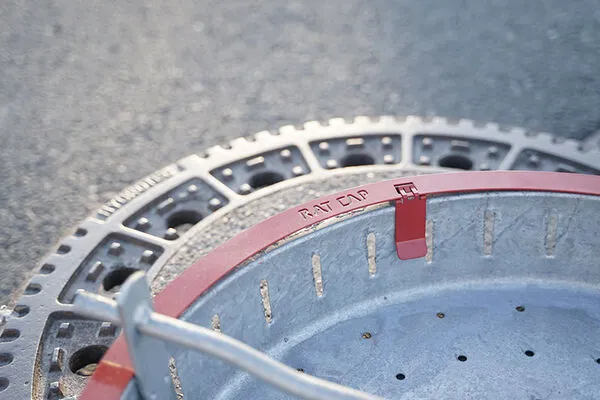
Simply attaches to the dirt trap of a manhole cover and closes the gap through which rats from the sewer can reach the surface.
Case Study 2020
Sascha Kokles works as an operating engineer at Berliner Wasserbetriebe and deals with faults in the wastewater system, as well as odor problems, blockages and rat infestations. He coordinates measures against pests and handles complaint management. Together with Futura Germany, Mr. Kokles is testing poison-free and digital alternatives to classic toxic baits against rats.
Video 2:23 Min
“In a questionnaire survey conducted in 2008, 85% of the 508 communities, municipalities, and wastewater associations participating nationwide reported performing rat control in the municipal sewer system (Krüger and Solas 2010). Based on the survey results, the initiators of the questionnaire campaign estimated the quantitative use of anticoagulants for rat control in sewers in Germany at more than 630 t of bait per year.”
– Study by the Federal Environment Agency on water pollution with forestry pesticides
“It is becoming clear that feeding baits containing anticoagulant rodenticides that are not accepted by rats remain in the sewer system in many places after a control measure, greatly increasing the risk of the baits coming into contact with (waste) water and thus releasing the active ingredients into the environment, especially in stormwater and combined sewer systems. “
– Study by the Federal Environment Agency on water pollution with forestry pesticides
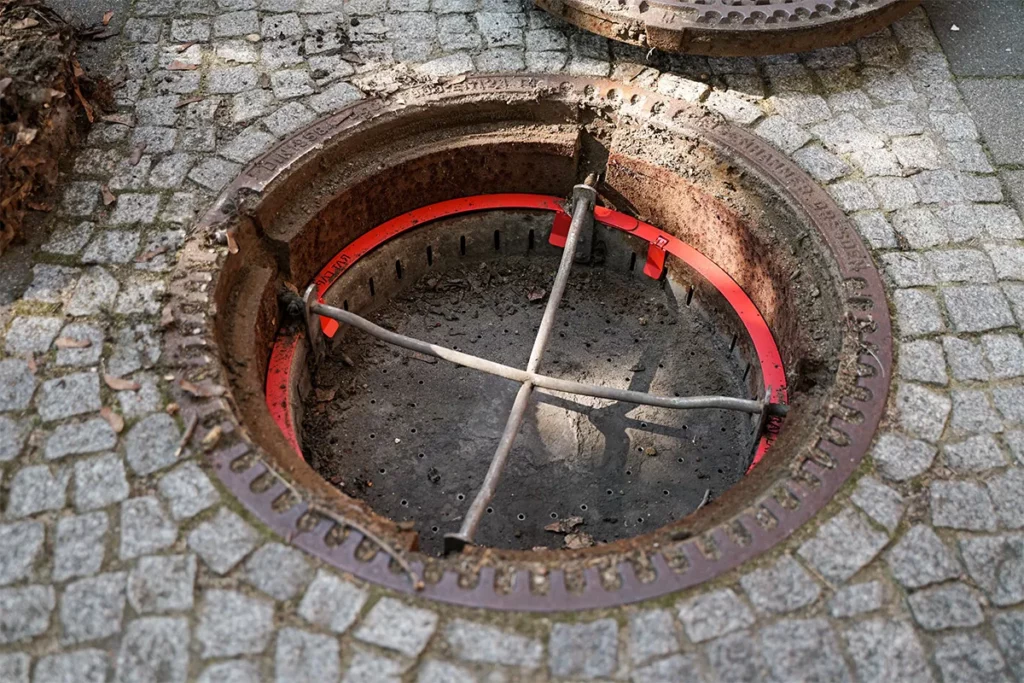
The RatCap® closes the approx. 5 cm wide gap between the dirt trap and the sewer, thus preventing rats from moving from the sewer to the outside to eat and back down again. Rats have been proven to use these paths to consume waste and food scraps in cities while we humans sleep and return to the sewer before the sun rises.
RatCap® is therefore a so-called IPM product. IPM stands for integrated Pest Management and describes the internationally recognized art of effective pest management through exclusion and co. So in German: we exclude rats, make the habitat inanimate and thus ensure that the population is naturally and biologically reduced and directly no more rats can occur on site near humans.
Pest cameras (PestCams) were installed in 25 sewer manholes for a period of 6 months. All kinds of baits were tried: Tox, Non-Tox (organic and synthetic), sausages, fruit, fruits, ham and many more. It showed: rats react “neophobic” and constantly rejecting any bait and thus cannot be caught/irritated with baits. Thus, this was proof that traps with bait, poison bait or similar did not work, which was already suspected by most professionals and cities. BUT: It showed that in over 90% of the manholes (urban, rural – so basically everywhere) the rats used the steps/ladders to climb up, jumped to the dirt trap, climbed out and returned a few hours later. When we then also set up cameras outside, we could observe that the rats were leaving the canal and looking for food outside – in the safety of the night.
No birds of prey, no humans – perfect for rats.
So thanks to this study and the same information from our first customers and co-developers of the RatCap®, such as BWB Berlin, we learned more about the animals’ behavior and decided that the easiest and most economical thing to do was to exclude the animals and thus control them biologically.
Rat Cap enjoys strong patent protection, so there will be no comparable products. In addition, Rat Cap has other patents, which allows us to build solutions in other countries, as well as for other types of manholes with other mechanisms. Tox bait, of course, clearly belong to the past. Not only because they are so harmful to the environment, but because any serious professional believes that 95% of the time they are not touched by rats. Even expensive automatic traps that cost over €500 or even €1,000 are not considered a viable alternative to the Rat Cap, which costs only €19.90 and lasts a very long time without changing batteries/traps.
The automatic traps have also been tested by many cities and it was found that although the trap reported that it killed 20 rats, the reality showed (validated with camera footage) that it was not rats, but in 90% of cases garbage or fecal remains.
RatCap<sup>®</sup> costs €19.90 and comes in a pack of 10 for €199.00. Volume discounts are also available for larger customers, cities or professionals.
RatCap® is made of PVC-coated stainless steel and should last at least 5-10 years in all weather conditions. We guarantee 2 years, but know that the first test units have been installed since 2019 and still look like new.
These are of course available on request from your customer advisor. 😊
We currently only offer RatCap® in Germany – for German DIN standardized gullies / manholes, but the way RatCap® works is patented worldwide, so we are currently working with large international companies (pest control companies) who want to launch the product in other countries with us.
We can’t talk about it publicly, but the largest company in Germany is probably BWB Berlin and BWB is practically a co-developer of RatCap® because its manager Sascha Kokles supported us from the very beginning and gave us tips – so we have developed RatCap® further in this respect and BWB is of course also a user of RatCap®. In addition, many cities and municipalities buy 1,000s of RatCaps® directly from us, as do pest controllers.
As RatCap® was only really launched in 2021, we expect the biggest rush in 2022 after a great start in 2021, which we were very excited about.
You can use them
Buy here or contact our customer service representatives.
Clearly the following breakdown:
Anything else would surprise us considering the results of the studies as well as the opinion of professional pest controllers. Poisons are not eaten by rats in 99% of cases (expert estimate) and are therefore – whether on a string or in a floating station – relatively pointless and are only used temporarily for about 5 years. Usage will decrease and IPM products such as RatCap, Nara and IoT traps will be used for this purpose.


Head of Sales and IoT Development
sebastian@futura-germany.com
+49 (0)170 919 976 4