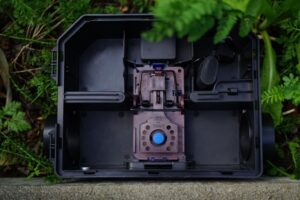
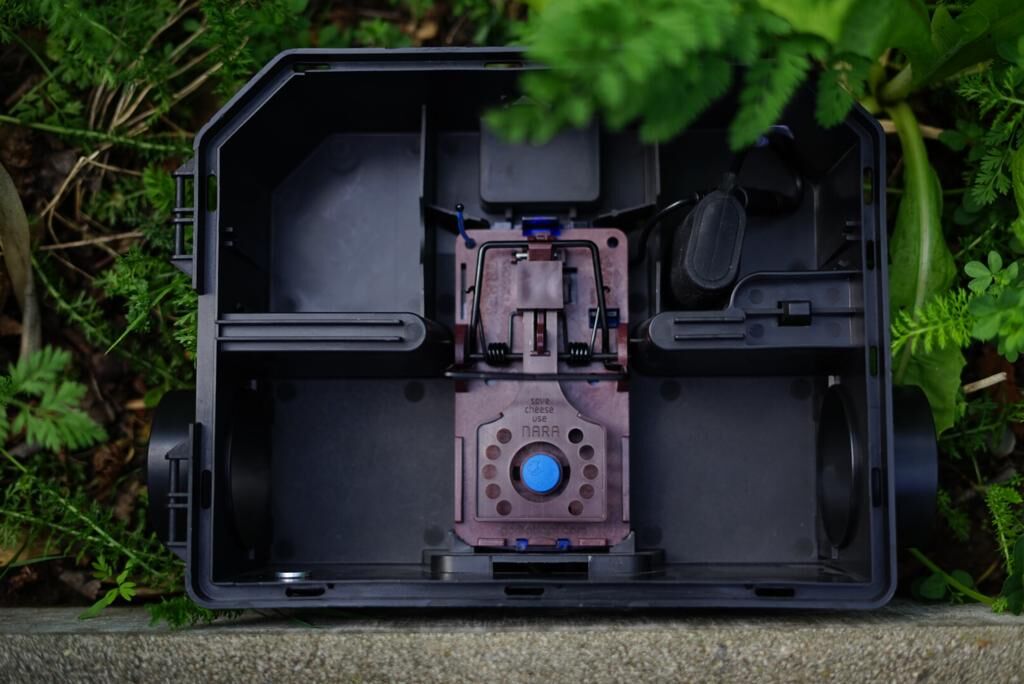
Both boxes and tunnels serve as a kind of outdoor housing for rat and mouse traps. They can usually be opened either with a universal key or, for example, by a turning mechanism. A single beating trap is placed in boxes. If a rat or mouse finds its way inside – attracted by a bait – the trap is triggered.
Tunnels are stations with two mousetraps. The goal is not so much to attract a mouse with bait. Instead, the tunnels are placed along the wall in the preferred path of a mouse. Since mice like to walk through small tunnels, they do not recognize the trap as an obstacle or danger and simply walk through it. No matter from which side the mouse runs through the tunnel, a catch is virtually guaranteed.
Tip: In tunnels, make sure that the mouse can still see a small light source on the other side. This means that monitoring systems such as sensors or cameras should be small enough not to completely block the tunnel. This reduces the probability of a successful catch, because the mouse recognizes the tunnel as an obstacle in its path.
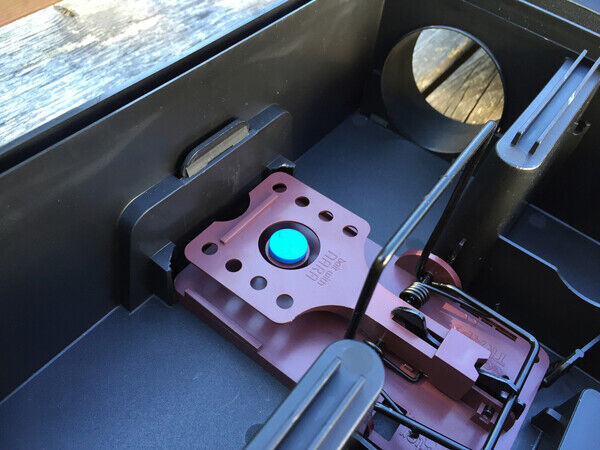
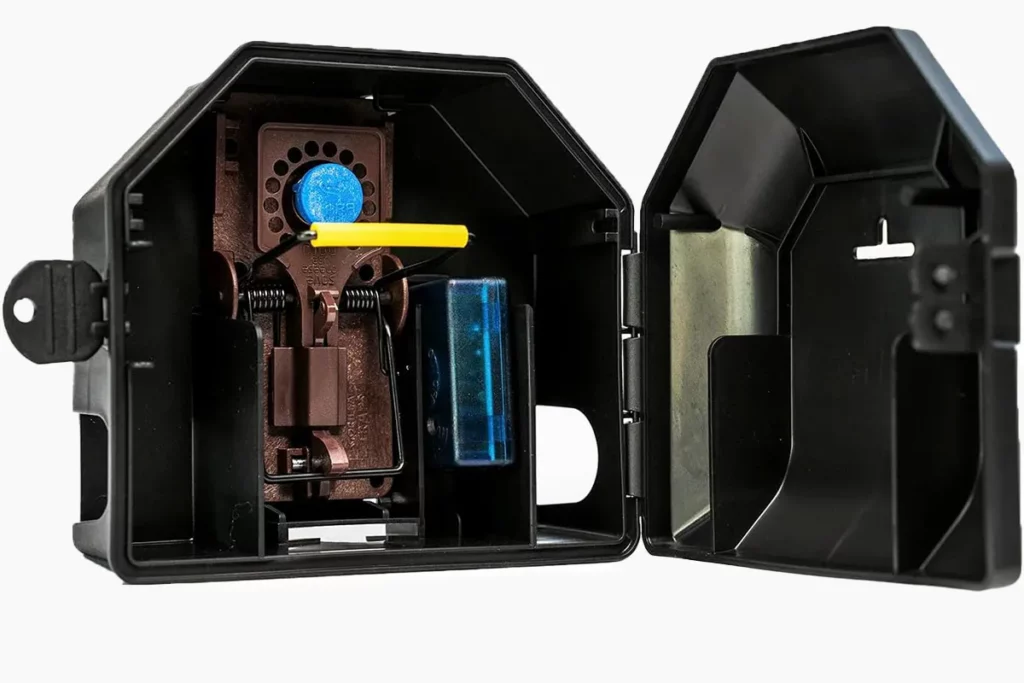
As with so many purchasing decisions, the same applies to stations: If you buy cheap, you buy expensive. Cheap or simply inappropriate products quickly break or require unnecessary time-consuming assembly. For new pest controllers who are just getting basic equipment, it is a good idea to purchase traps, stations, baiting and sensors for digitization from one manufacturer. On the one hand, this guarantees compatibility of the systems. On the other hand, perhaps a quantity discount can be negotiated.
However, combining products from completely different manufacturers is not uncommon in professional pest control and can be implemented well if you follow our six tips. When in doubt, it is always better to ask once more and test once more. Then nothing can go wrong.
We will be happy to advise you!